
Virginia Beach sits directly on the Atlantic, and that oceanfront location means salt laden air reaches nearly every vehicle in the city, not just those parked closest to the water. Layer on top of that a genuine storm season that brings both hurricane remnants moving up the coast and the powerful Nor’easters that can affect this stretch of Virginia even outside of hurricane season, and you get a combination of ongoing corrosion risk and periodic severe weather that tests a vehicle’s undercarriage and electrical system in ways few inland cities ever experience.
Why Virginia Beach’s Coastal Position Creates Constant Salt Exposure
Prevailing ocean winds carry salt particles well beyond the immediate oceanfront, reaching vehicles throughout Virginia Beach and into neighboring areas with meaningful consistency. This is different from a city with only occasional coastal exposure, since Virginia Beach vehicles deal with this salt content as a near constant background condition rather than an occasional concern tied to specific weather events. Combined with the region’s humidity, this salt residue stays damp long enough to meaningfully accelerate corrosion on exposed metal components throughout the year, not just during storm season itself.
How This Ongoing Exposure Affects The Undercarriage
The undercarriage bears the heaviest burden of this constant salt exposure, since it sits closest to the road and collects the most direct contact with salt residue without ever being visible during a routine glance at the vehicle. Frame rails, brake lines, exhaust systems, and suspension components are all vulnerable, and brake lines deserve particular attention since these steel components carry fluid under pressure, meaning corrosion here can eventually compromise safety rather than just appearance.
Why Electrical Systems Face Their Own Version Of This Risk
Salt laden humid air works its way into electrical connectors, junction boxes, and small gaps in wiring harnesses over time, promoting corrosion on metal contacts designed for a clean, uninterrupted electrical signal. Ground connections, battery terminals, and sensor connectors throughout the vehicle are all at risk, often showing up as intermittent problems rather than a single dramatic failure, symptoms like flickering dashboard lights, inconsistent power window operation, or a check engine light that appears and clears itself depending on recent humidity and salt exposure.
How Storm Season Adds A Separate, More Acute Risk
Beyond the ongoing background exposure to salt air, Virginia Beach’s storm season introduces a more acute risk in the form of storm surge and flooding, particularly in low lying areas near the oceanfront or Sandbridge. A vehicle exposed to storm surge or significant flooding faces a considerably more concentrated version of the same corrosion and electrical risks that ordinary salt air causes gradually, since standing salt water is far more aggressive than salt air alone.
Nor’easters deserve mention here too, since these storms can bring significant coastal flooding and high winds even outside of the traditional hurricane season, meaning Virginia Beach’s storm related vehicle risk is not confined to a single narrow window of the year the way it might be in a purely hurricane focused Gulf Coast city. If your vehicle has been exposed to flooding from either type of storm, it is worth having it inspected before assuming everything is fine, since water intrusion can affect electrical connections and the undercarriage in ways that are not always immediately obvious. Our guide on the top 10 reasons your car won’t start and how to get back on the road covers a range of causes worth ruling out after this kind of exposure.
This extended risk window is worth planning around specifically, since a Virginia Beach vehicle can face a hurricane related flooding event in late summer and a Nor’easter related one just a few months later in the fall or winter, meaning a single seasonal check timed only around hurricane season would still leave the vehicle unprepared for the other type of storm entirely. Building storm readiness into a year round mindset, rather than a single annual window, better reflects the actual pattern of coastal Virginia weather.
Why Routine Inspections Matter More Here Than Inland
Because both the constant background salt exposure and the more acute storm related risks tend to affect the undercarriage and electrical system out of sight, routine inspections carry more weight in Virginia Beach than they would for an inland Virginia driver. A technician familiar with coastal conditions knows to check brake lines, frame components, and accessible electrical connectors more thoroughly than a generic maintenance schedule would suggest, since this combination of ongoing and periodic exposure genuinely accelerates wear beyond standard expectations.
Simple Habits That Help Slow The Damage
Washing your vehicle regularly, including a deliberate undercarriage rinse, helps remove accumulated salt before it has extended time to sit and cause damage, and this matters year round in Virginia Beach rather than just during storm season. Applying dielectric grease to accessible electrical connectors and battery terminals adds a protective barrier against moisture intrusion, while a rust inhibiting treatment on exposed undercarriage components provides meaningful protection against the ongoing coastal exposure this city produces.
Checking drainage points around doors and rocker panels is worth including in this same routine, since a clogged drain allows salt laden water to pool in places it should otherwise flow away from, giving corrosion an extended window to develop in exactly the spots most prone to it. This is a small check that takes only a moment but meaningfully reduces the kind of hidden, gradual damage that Virginia Beach’s climate tends to cause over time.
Why A Mobile Mechanic Fits Virginia Beach’s Coastal Reality
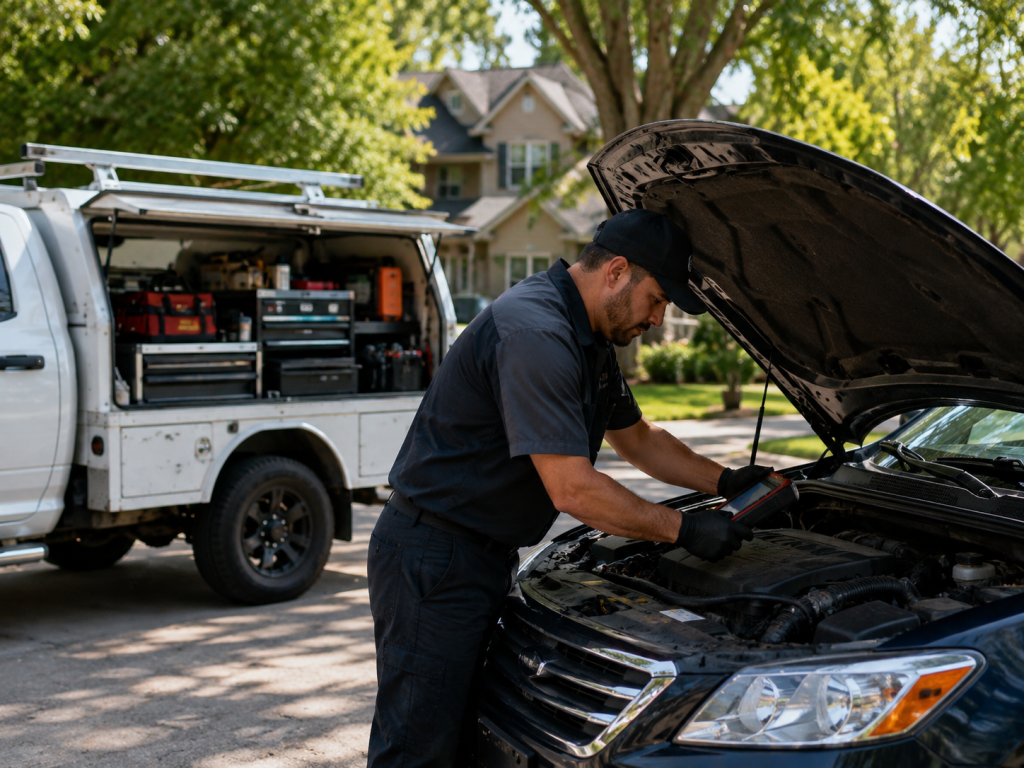
Given how much of this maintenance revolves around inspecting hard to reach undercarriage components and electrical connections, having a technician come directly to your home or workplace anywhere in Virginia Beach is often more practical than arranging a separate shop visit. A mobile mechanic can perform a thorough inspection of both systems, applying protective treatments and catching early corrosion before it becomes a larger issue, whether that inspection is part of a routine check or a post storm assessment.
We covered the broader benefits of this approach in our article on why mobile mechanics are better than traditional auto shops in Virginia Beach, which explains how convenience and local familiarity come together, particularly useful for this kind of ongoing coastal maintenance.
Protect Your Vehicle From Both Sides Of This Coastal Challenge
Virginia Beach’s constant salt air and periodic storm season are both simply part of life here, and while neither can be avoided, staying ahead of how they combine against your vehicle is well within your control. Catching undercarriage rust and electrical corrosion early, along with a thorough check after any significant storm exposure, can add years to the life of components that would otherwise wear out well before their time in this environment.
If it has been a while since your vehicle had a thorough inspection, visit our homepage to learn more about our services, or reach out through our contact us page to schedule a visit wherever your vehicle happens to be in the Virginia Beach area.
A little proactive care now goes a long way toward keeping your car dependable despite everything salt air and storm season throw at it throughout the year.